Rio Azul is a birder’s dream come true with over 500 species of birds and new species found every year.
Convenient Booking
Exclusive Offers
Great Prices
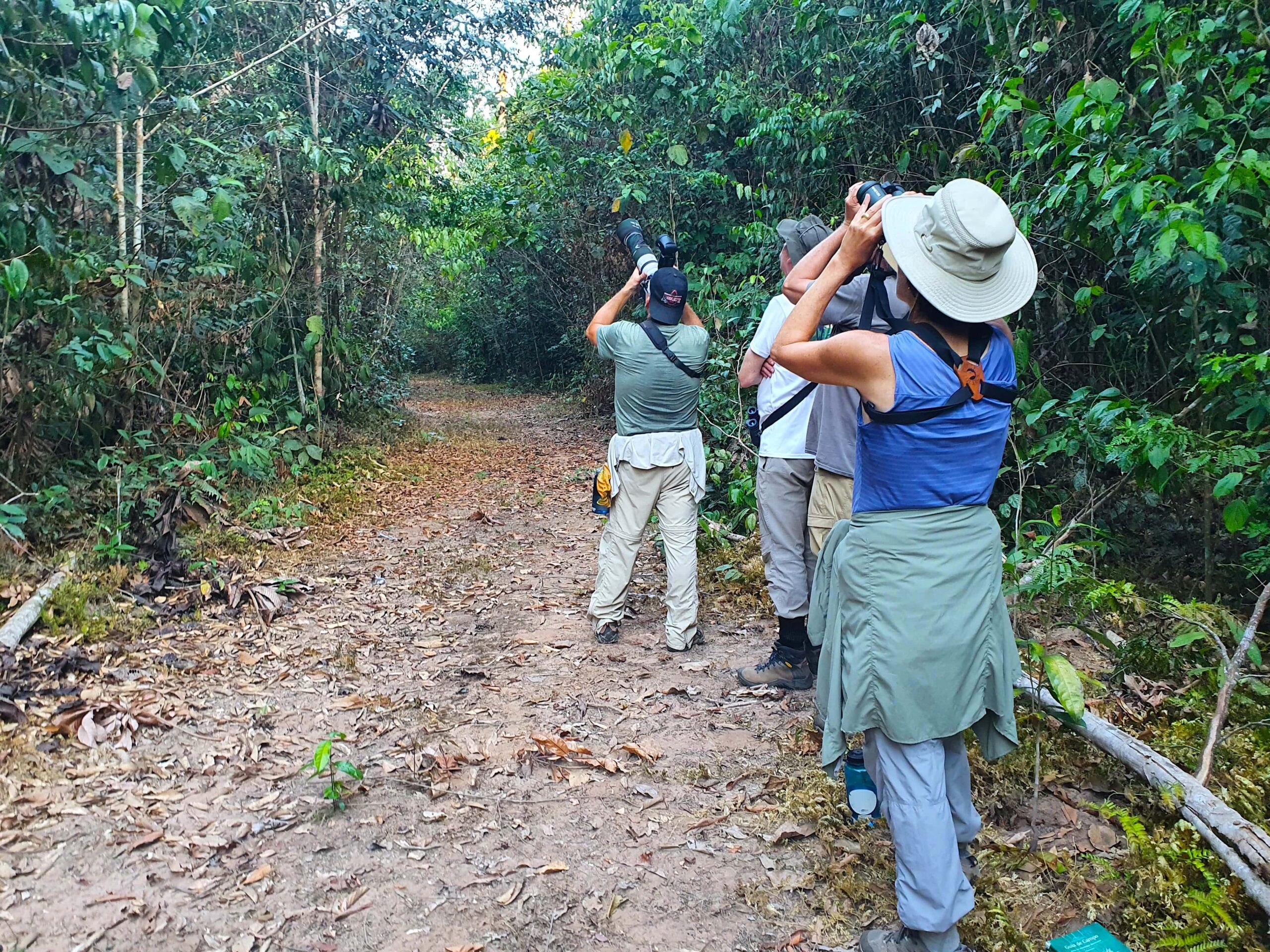
Birds are plentiful here, and specialist guides will take you to all the birding hot spots on the walking trails and along the river. Spotted high-up in the tall trees and low-down on the forest floor.
Our Birds
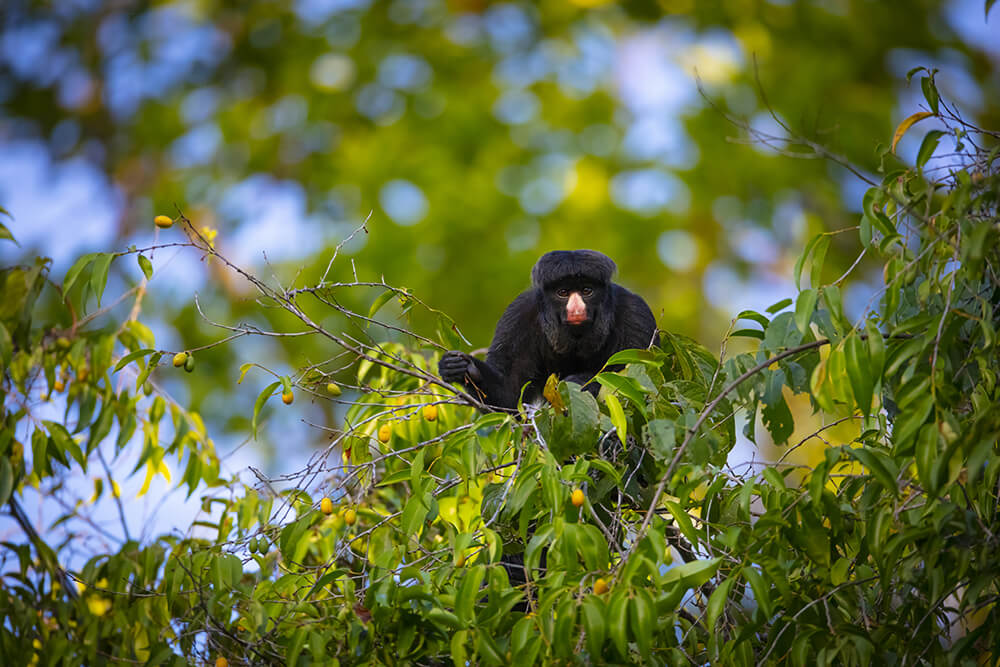
Our birding safari will get you ticking some of the most hard-to-find birds off your list and is the idyllic place to see the endemic Bald parrot.
The bald parrot, endemic to the lower Madeira-Tapajós and along the southern slopes of the Serra do Cachimbo into southern Pará state, is the star bird at the lodge. The bald parrot is secretive, but the Rio Azul is certainly one of the best places to try to see it in all its unfeathered-orange-headed glory.
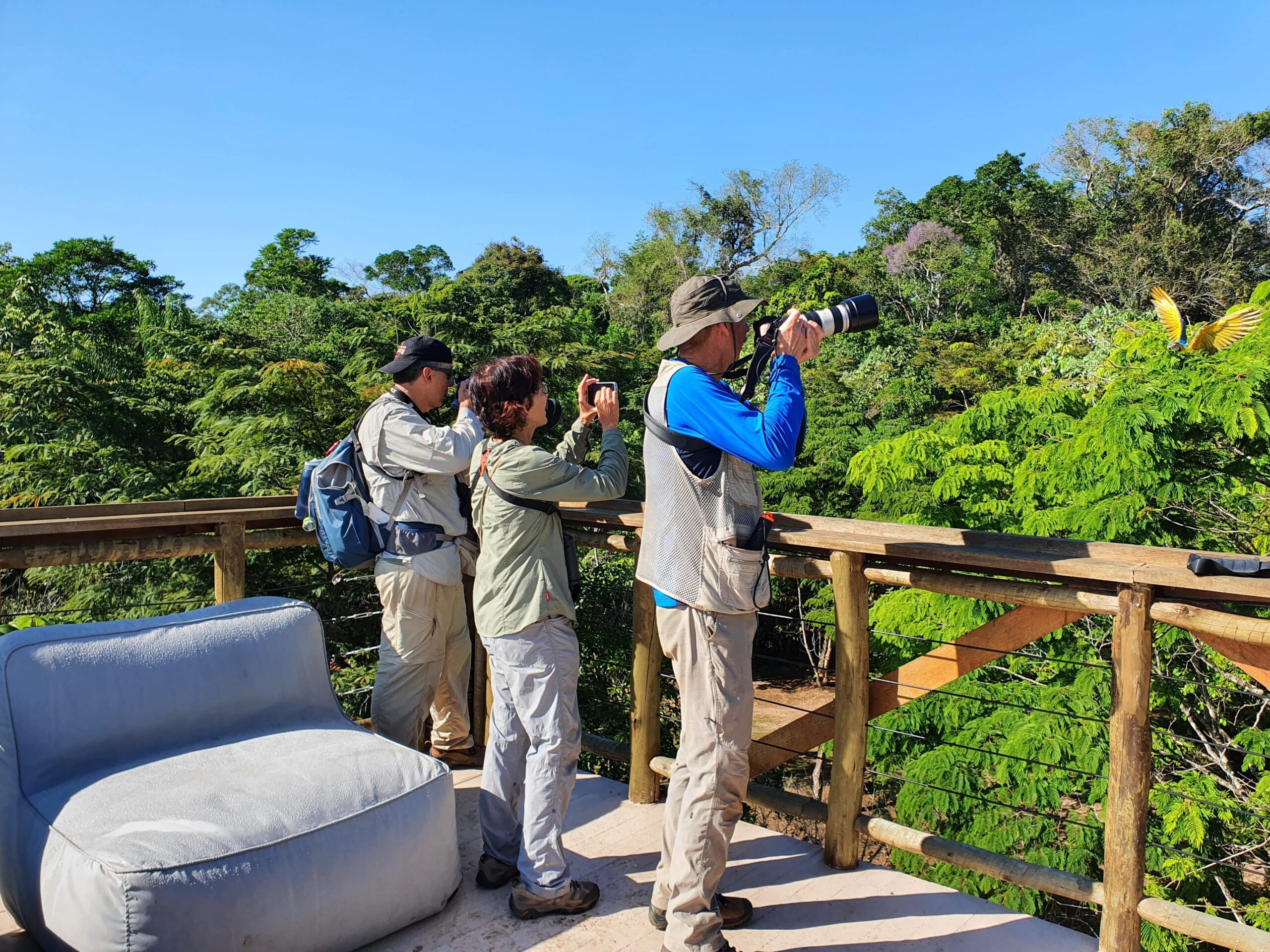
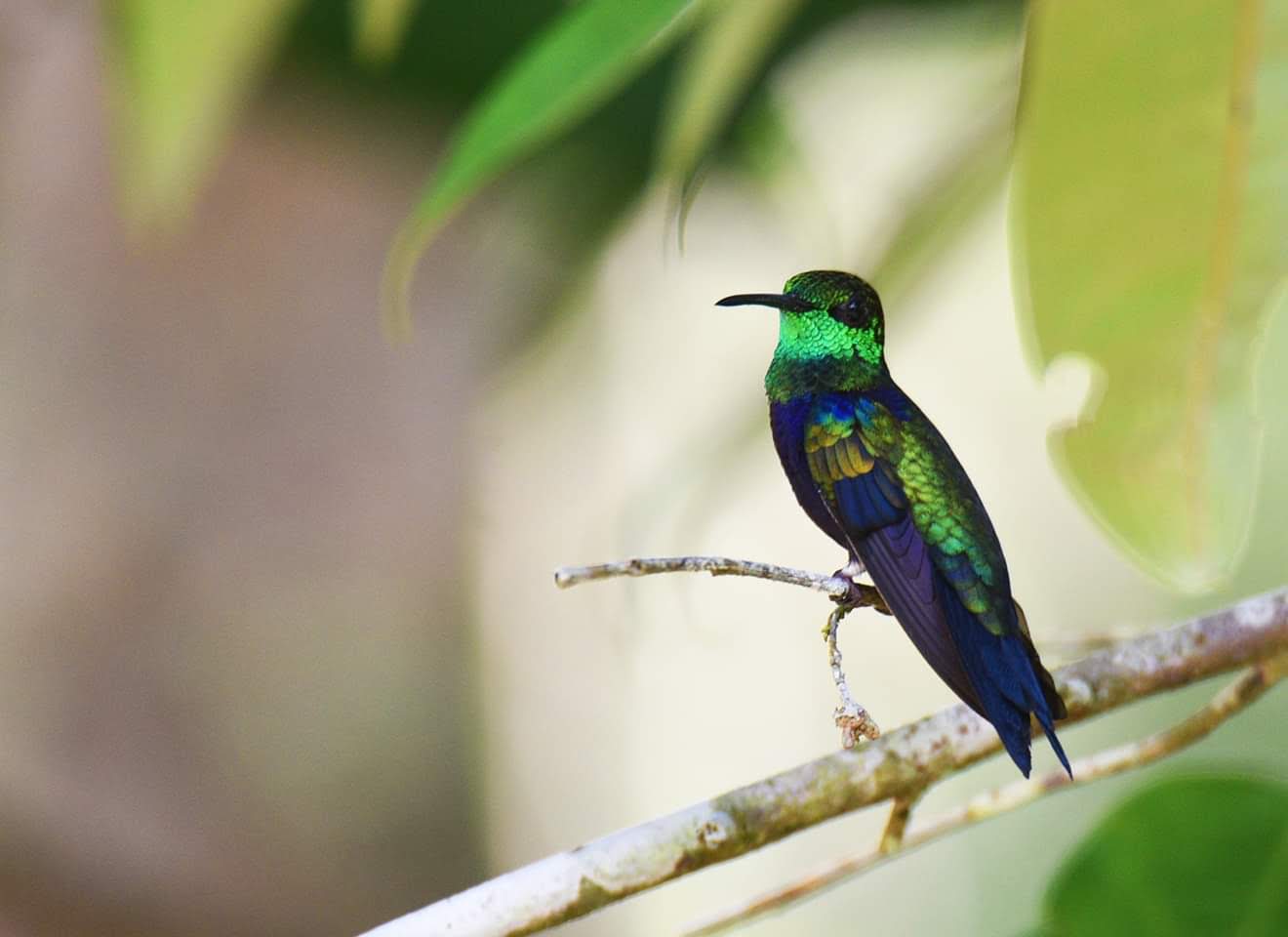
The lodge clearing itself is one of the focal points for any birding visit to the Rio Azul, as the native flowering and fruiting plants in the garden attract a diversity of tanagers and hummingbirds. The lodge maintains hummingbird feeders attracting Gould’s jewelfront, fork-tailed woodnymph, green-tailed goldenthroat, white-necked jacobin, amethyst woodstar, black-throated mango, tapajos hermit and straight-billed hermit. The sturdy wooden observation tower (12-metres-high) right beside the lodge gets one closer to the surrounding canopy, where toucans, macaws and puffbirds spend their days.
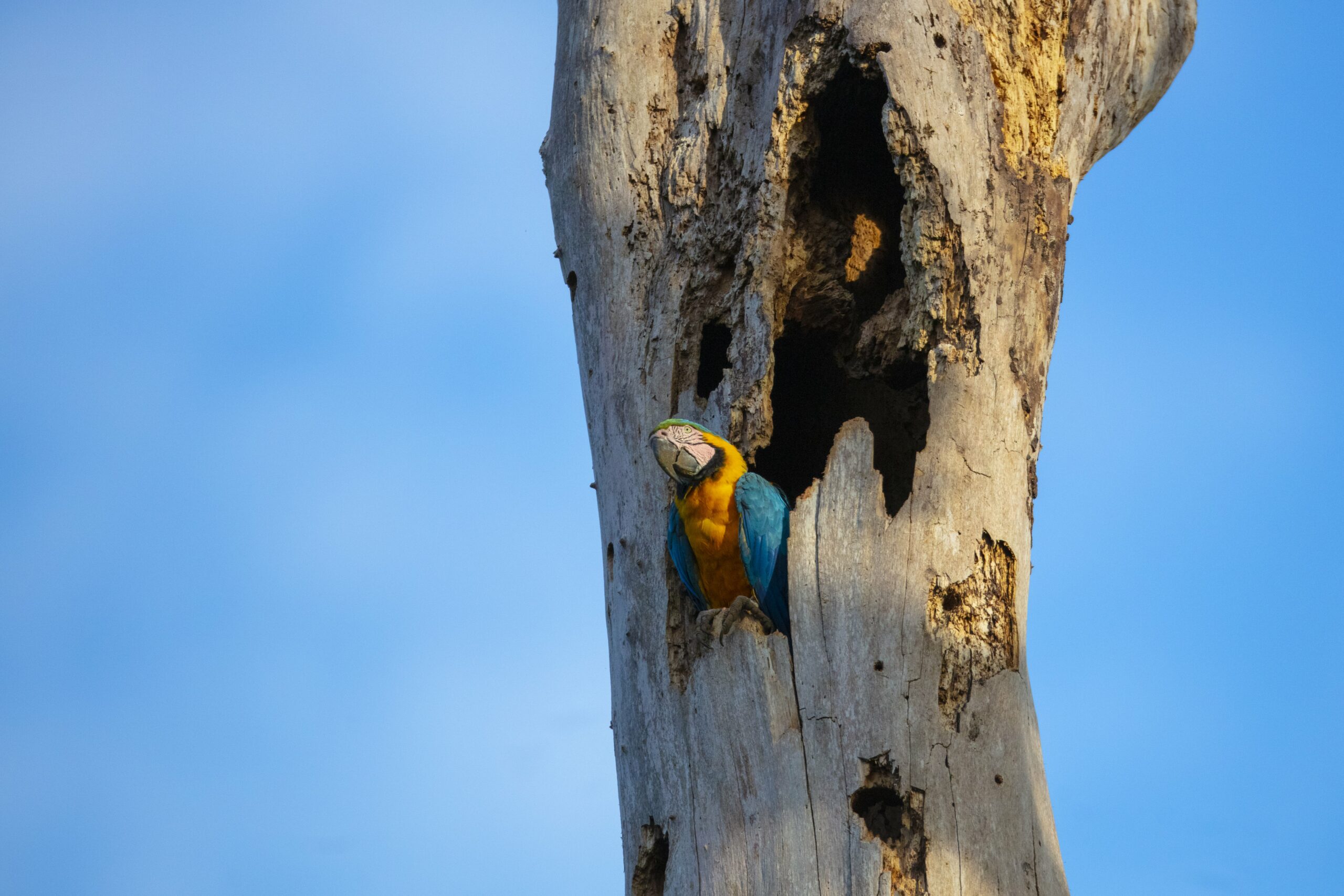
A couple of kilometers away from the lodge, there is also a parrot roost. Here the forest was chopped down, except for a handful of palm trees, each afternoon around sunset, hundreds and hundreds of macaws, parrots, parakeets come to sleep in the trees. This is an exceptional event to witness.
Our Birds
Enables access to keen birders to a number of important habitats through good trails, old logging and farm road and along the Azul river itself. The diversity of accessible habitats is the key to the high diversity of bird species, along with an abundance of natural and anthropogenic clearings providing good places to see many species normally difficult to observe. The road trip, from Alta Floresta to the lodge, runs mainly through open habitats that have been cleared for cattle ranching.
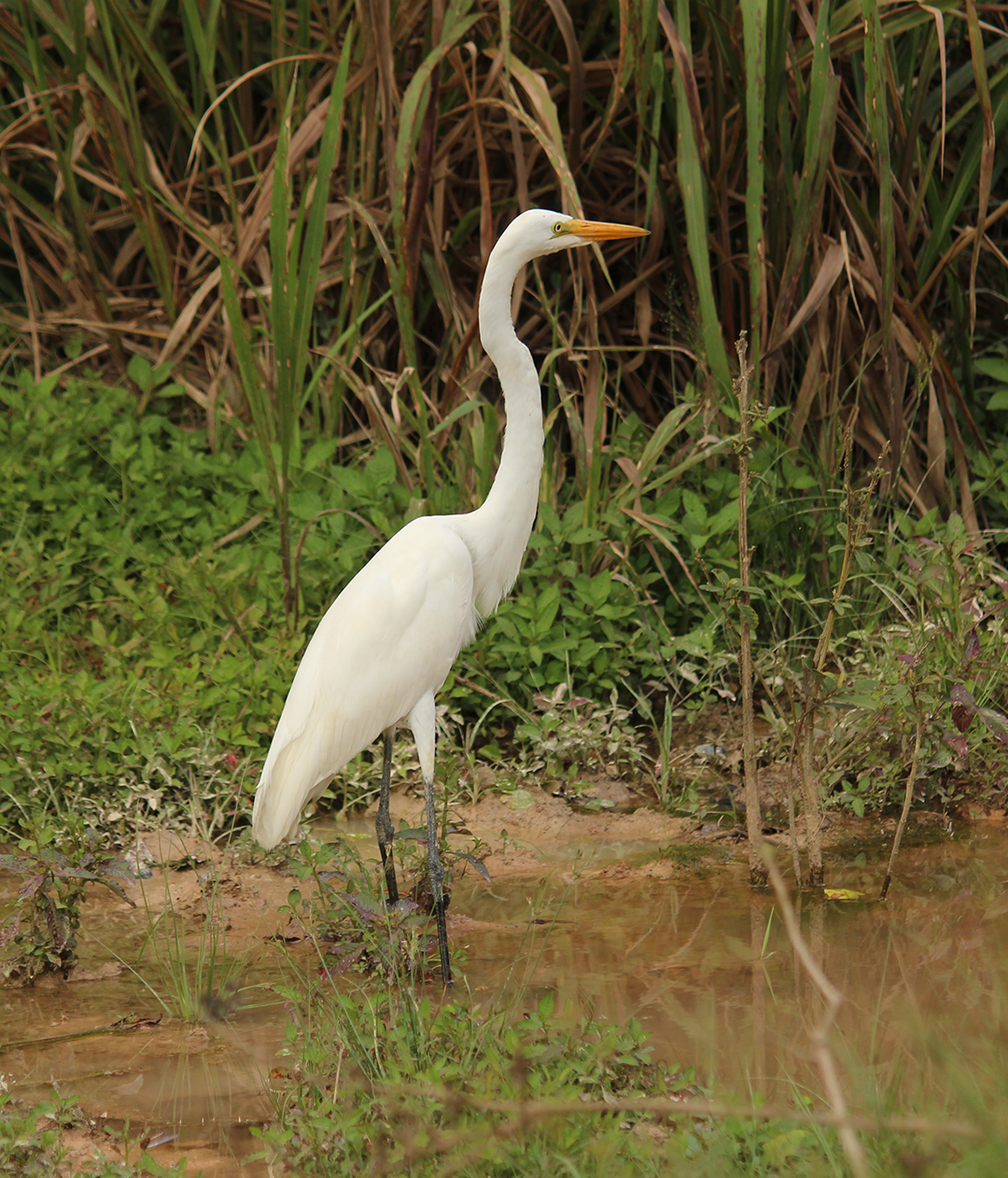
Interesting stops can be made along the way, red-bellied macaw, fork-tailed palm-swift, point-tailed palmcreeper and sulfuric flycatcher can be found along the road. After crossing the Teles Pires river by a ferry boat, the road passes through forested areas where we find several interesting mixed flocks during the heat of the day. There are also some lakes that produce commoner waterfowl. Any of these ponds should be checked for ash-throated, rufous-sided and gray-breasted crake in its grassy banks. Parrots, pearl kite and other raptors can be found along the road.
The hyacinth macaw has become the face of ecotourism in the Pantanal, but also have strongholds in the Amazon. One such area is the Serra do Cachimbo, the range of hills where the Azul river rises. These birds can be seen, sometimes flying through the farm roads, including the access road to the lodge, and seeing this magnificent and vulnerable macaw will be a priority for any visit. The neighboring farms around the lodge have many common species of open areas, such as striped cuckoo, pale-breasted spinetail, grassland sparrow, red-breasted blackbird, a recent kind of settlers in northern mato grosso and southern pará.
The campinas and campinaranas are areas of small prairie savanna-type habitats, scrub vegetation of canopy height from 4 to 8 meters (13 to 26 feet) on white sand soil, with many terrestrial bromeliads and other creeping groundcover, located at the entrance trail over 1.6 km (1 mile) of the lodge, it hosts a number of typical species of Amazonian caatinga including natterer slaty-antshrike, white-fringed antwren, lesser elaenia, black manakin, white-naped xenopsaris, black-billed thrush, black-faced tanager and plush-crested Jay. This habitat, locally called cerrado, undergoes incredible changes between dry and wet seasons.
Hummingbirds are easily seen in the numerous flowers in the rainy season including Green-tailed goldenthroat, black-throated mango and amethyst woodstar. The stature of the vegetation in the meadow along with the entry trail becomes an excellent area to see parrots in the morning as they move from resting sites to feeding areas. White-bellied parrots and bald parrots are often seen in pairs or in small groups in the morning. Blue-and-yellow macaws are usually numerous, as the white-eyed parakeets, blue-headed and orange-winged Amazon parrots. Other species easily seen in smaller numbers include chestnut-fronted and red-bellied macaws, golden-winged parakeet, yellow-crowned Amazon and Kawall's parrots.
The medium-high campinarana and transition forest between the low plain of white sand and the highest forest is excellent for manakins: Dwarf tyrant-manakin, pale-bellied tyrant-manakin, red-headed, fiery-capped, white-crowned and flame-crested manakins are all present there, in addition to the cinnamon manakin-tyrant. Bronzy jacamar and brown-banded puffbird can be seen along the entrance trail, and it is an excellent habitat for rusty-breasted nunlet. In the dry season, the thick litter in the forest makes terrestrial species easier to detect by sound when they are foraging or walking on the forest floor, species like tinamous, wood, quail, and cracids can be found.
A loop trail through the transition forest bonds the lodge to the riverbank and returns to the lodge. This trail is good for woodcreepers including the spix, red-billed and blackbanded, many tanagers and various species of myrmotherula antwrens. Pavonine quetzal and yellow-browed antbird are among the interesting species found near the lodge. Blackish nightjar is very common in the clearing, White-necked jacobin, black-bellied thorntail, fork-tailed woodnymph, green-tailed goldenthroat, black-eared fairy, amethyst woodstar and a recently established phaethornis species, the tapajós hermit (phaethornis aethopygus), have all been seen in flowers near the cabins and restaurant.
The transition forest and igapó trails are good for the Brown-banded and Rufous-necked puffbirds, snowy and flame-crested manakins, fulvous-crested tanager, and Amazon royal flycatcher. Tooth-billed wren, pará gnatcatcher, short-billed and purple honeycreepersfeature highly in canopy flocks. Chestnut-belted gnateater is abundant in the lower growth. Swarms of army ants attract a number of obligatory ant-followers, including the white-chinned woodcreeper, scalebacked antbird, white-backed fire-eye, black-spotted bare-eye and bare-eyed antbird.
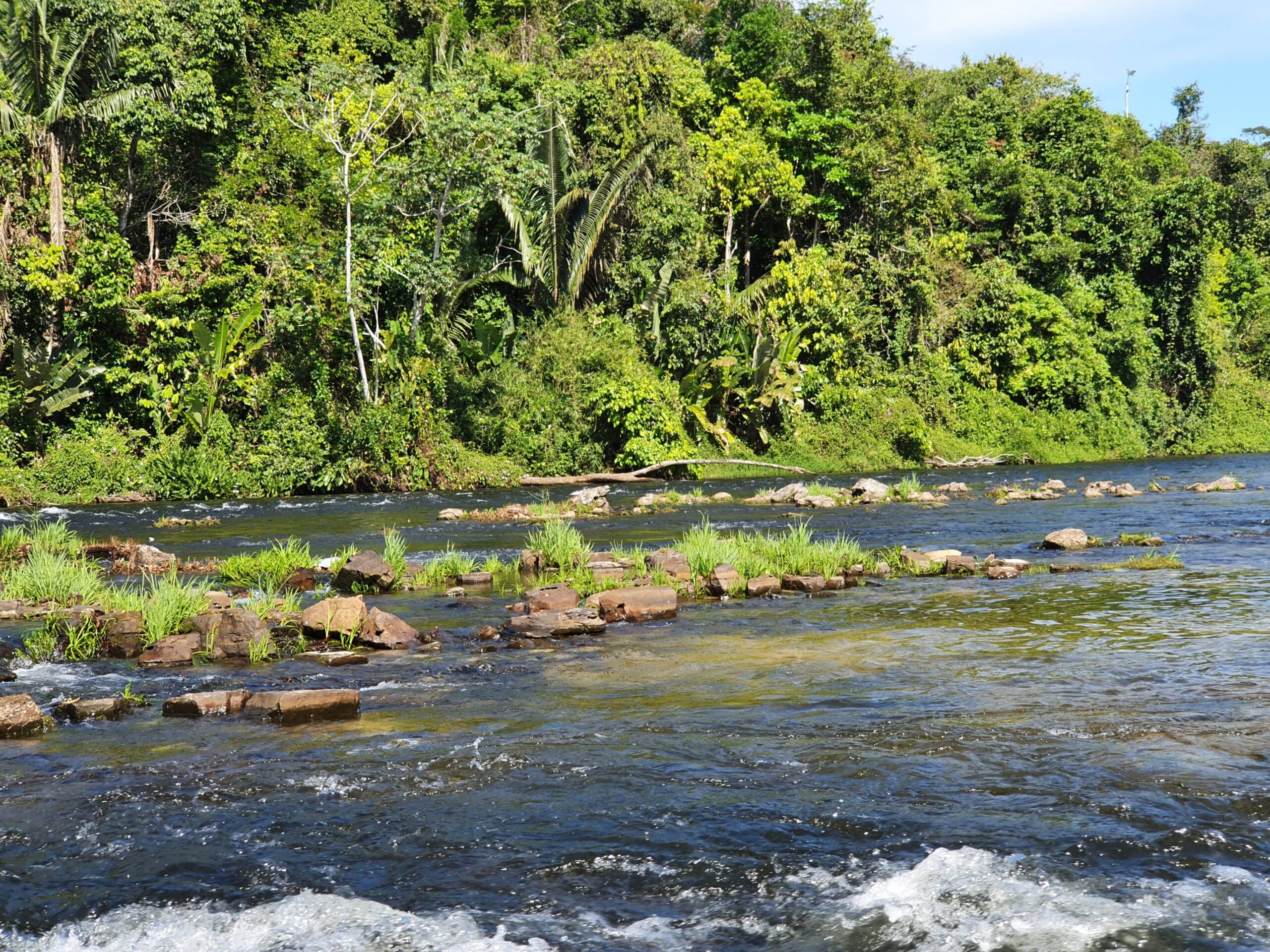
The river itself offers very good birding opportunities. Bald parrots are quite common along the Azul River and can often be seen or heard, above the treetops, in pairs or in small groups. The birds tend not to be very cautious when perched, and with persistence they can be tracked when feeding quietly in the canopy of flowering or fruiting trees. The Azul River is currently the most accessible and reliable place to encounter this coveted and curious endemic parrot.
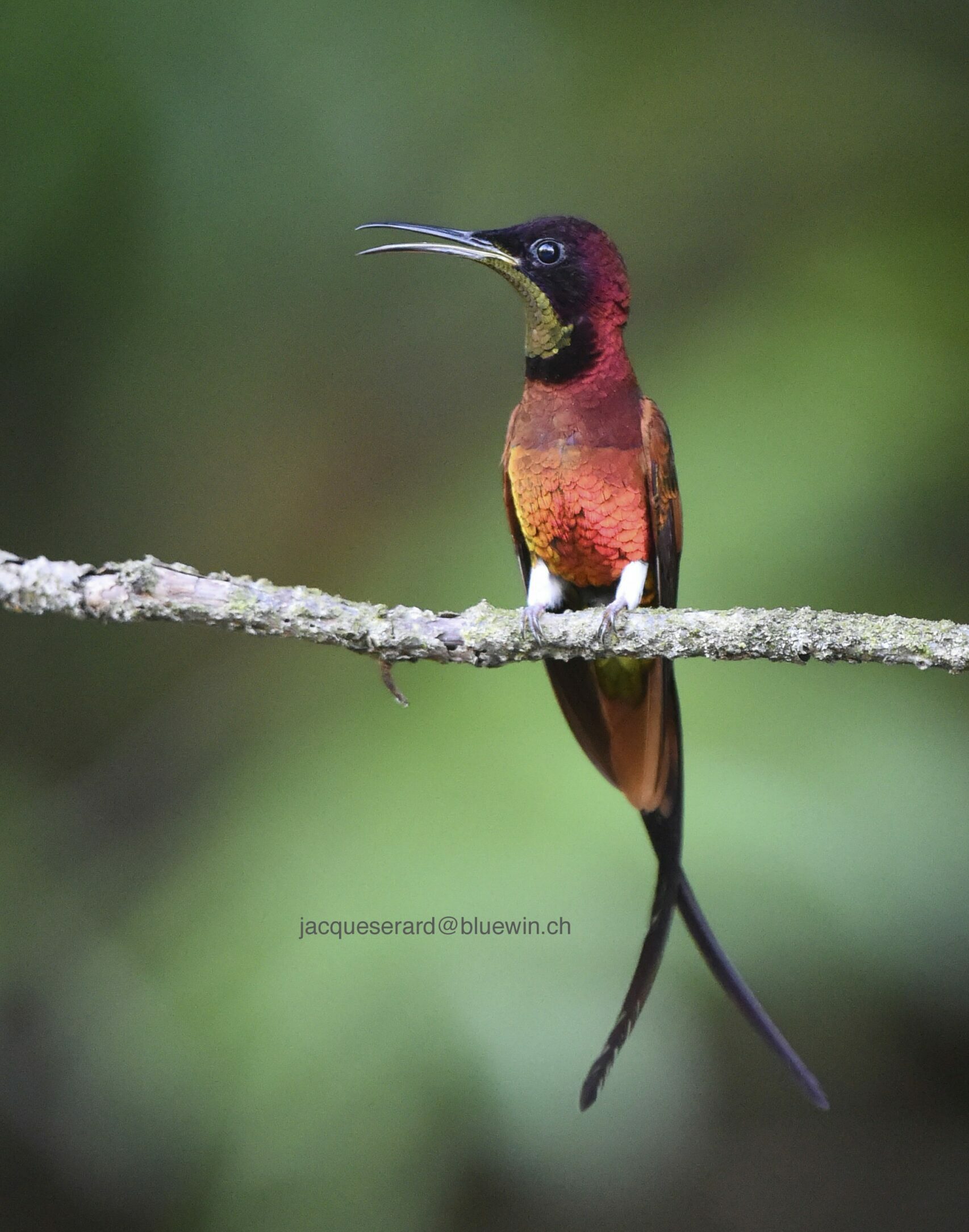
The river is also the best place to encounter another of our stars, the crimson topaz in one of its few known localities south of the Amazon River. Downstream of the lodge the Azul River runs through a number of different habitats, interleaving low cerrado, forests on poor soils, higher sandy igapó, mixed with Mauritia palm groves and higher forest. Species found in riparian edges include speckled chachalaca, madeira parakeet, cream-colored woodpecker, plain-crowned spinetail, gray antbird, Amazonian streaked antwren, sulfuric flycatcher, spotted tody-flycatcher and swallow tanager.
Good lines of sight allow observers to catch canopy species, such as redthroated piping-guan, brown-banded puffbird and spangled cotinga , or to see rising birds of prey, such as an ornate or black hawk-eagle.
The tiny water courses, including some reached by foot in just a couple of minutes, hold specialties like glossy antshrike, striped woodcreeper, dot-backed antbird and cinnamon attila.
There are several lakes and lagoons that are fed by the Rio Azul. Exciting water activities there include snorkeling, kayaking and stand-up paddling...
Take a boat trip, through swirling rapids, to an exciting lunch in the forest. After which you’ll have time to bathe along the river, before heading home...
What could be more romantic than a private dining experience on the top level of our viewing tower. total privacy, incredible food and unique night sounds amongst the beauty of the stars (weather permittable)...
Here you can enjoy daily boating trips along the Azul River. You’ll be lead through small rapids by skilled local boatmen and guides, to show you breathtaking areas...
Game drives are quite the jungle experience too. Take a trip along the edge of the forest to an area where Macaw and other parrots like to roost...
The guided walks in and around the lodge along forest trails are a wonderful walking experience. They offer a variety of levels from easy walking to more challenging trails, amongst varying habitats...
Rio Azul is a birders dream come true with over 500 species of birds and new species found every year. From the minute you arrive, the birds will keep you mesmerized...
The experience at the lodge doesn’t stop at safaris. There’s a stunning boardwalk you can walk through beautiful forest to get to the river where you’ll find the sun deck...
A wonderful opportunity to get active on the water. You can adventure along the Azul River by canoe, to experience the incredible fauna and flora, fish, caiman and other...
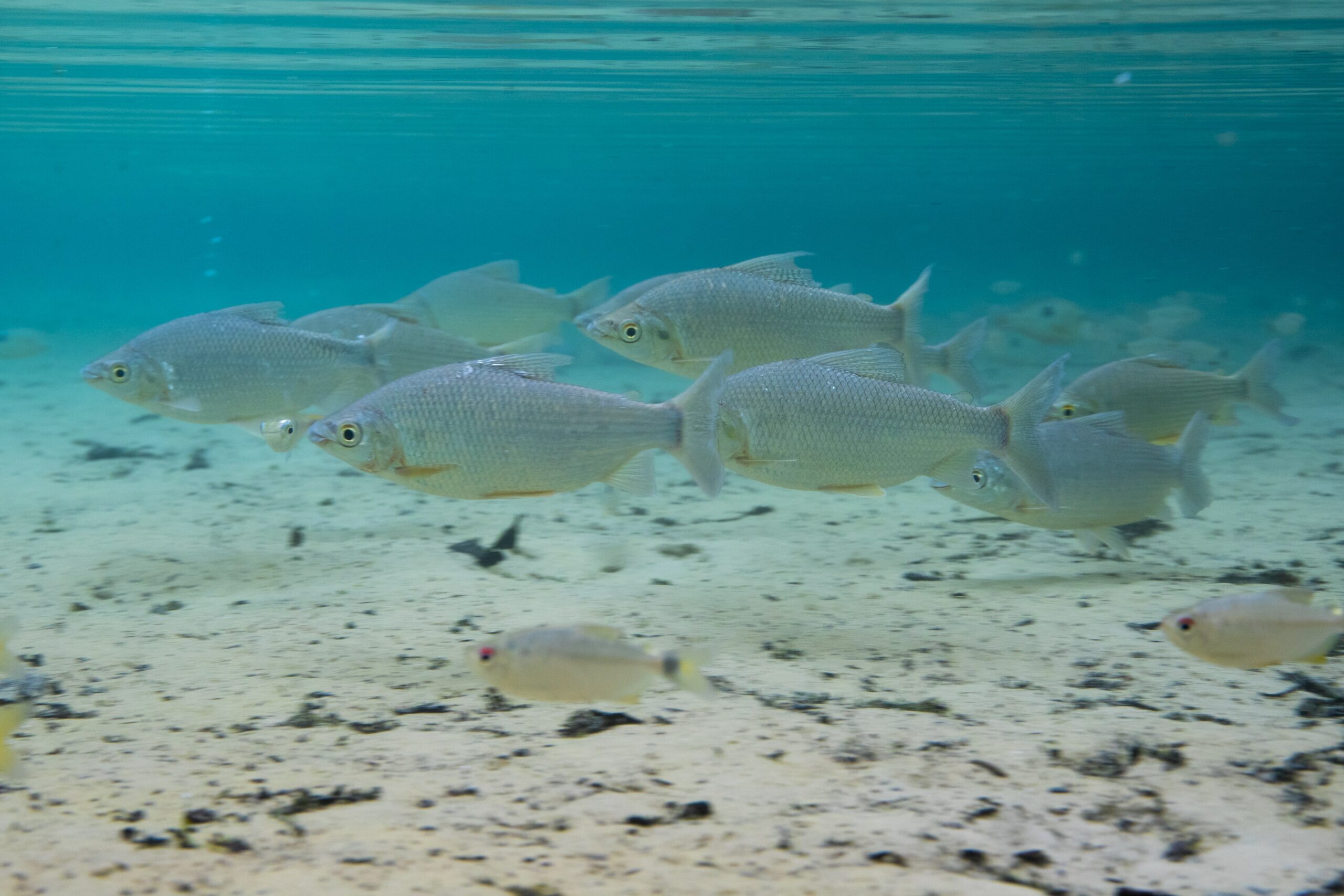
For all fishing enthusiasts, Rio Azul Jungle Lodge offers the unique opportunity for you to fly fish during the dry season...
Do your conservation bit for the Amazon rainforest and plant a tree! At Rio Azul Jungle Lodge, we’ll take you to the edge of the forest at sunset to watch beautiful birds coming into roost...